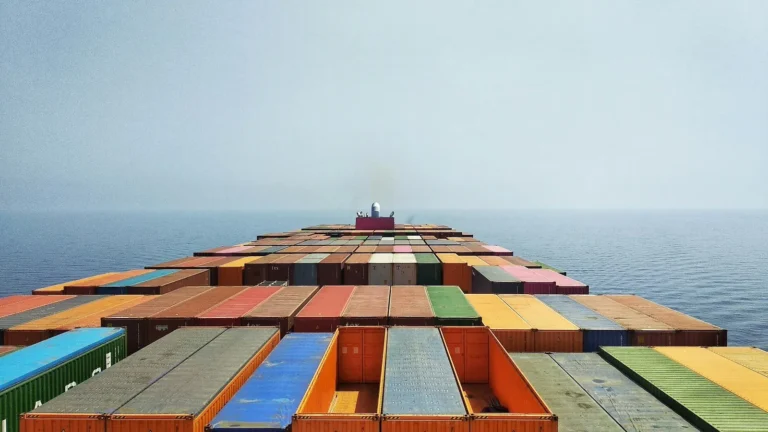
The IMO Sub-Committee on Carriage of Cargoes and Containers (CCC 12), which met in London from 14 to 18 September 2026, finalised a revision of the guidelines that every container ship’s Cargo Securing Manual (CSM) is built on. For the first time, the guidance sets out how approved lashing software can support the manual. The timing matters: port State control officers in the Paris and Tokyo MoU regions are checking cargo securing on board until 30 November 2026.
What CCC 12 agreed
- Revised Cargo Securing Manual guidelines: The Sub-Committee completed its revision of the Revised Guidelines for the Preparation of the Cargo Securing Manual (MSC.1/Circ.1353/Rev.2). The revised text adds an appendix on lashing software for container ships.
- Performance standard for lashing software: CCC 12 agreed a harmonised performance standard for the software. It covers functionality, calculation methods, tolerances, the user interface, testing, approval and survey, and data exchange with other onboard systems.
- Support, not substitute: The software is meant to supplement the CSM, not replace it. Correct input data, well-maintained securing equipment, physical checks and the crew’s judgement remain essential.
- Future CSS Code annex: The Sub-Committee also supported a proposal for a new annex to the Code of Safe Practice for Cargo Stowage and Securing (CSS Code). The annex would give a standard way to assess how well container securing arrangements perform. The proposal goes to the Maritime Safety Committee for a decision, with completion targeted for 2030.
Status and timing
All CCC decisions still need approval by the Maritime Safety Committee. Class society reports indicate that the revised guidelines are expected to go to MSC 113 in 2027. Until then, the text is a draft and creates no new obligation. The guidance is written mainly for new container ships. Existing ships may apply it voluntarily with the agreement of their flag Administration. The exact application date will only be confirmed when MSC approves the circular.
How this fits with IACS rules
Class societies are already moving in the same direction. IACS UR C6 (Requirements for Lashing Software) and UR C7 (Approval and Certification of Container Securing Systems) apply to ships contracted for construction on or after 1 July 2025. The new IMO guidance gives flag Administrations a common reference when they approve Cargo Securing Manuals that rely on such software.
Other CCC 12 outcomes worth noting
- Methyl/ethyl alcohol as fuel: The Sub-Committee finalised a full revision of the interim guidelines (MSC.1/Circ.1621), covering tank arrangements, ventilation, bunkering, fire safety and personal protection. These also await MSC approval.
- IMSBC Code: New cargo schedules and updates to the shipper’s cargo information were agreed in principle for the next amendment cycle (09-27).
- Onboard carbon capture and storage: Work started on safety guidelines. A correspondence group will report to CCC 13 in 2027.
Who is affected
- Container ship owners and operators: They should review whether their lashing software, data and procedures match their approved CSM. Port State control officers may already be asking about this during the current inspection campaign.
- Maritime Administrations and recognised organisations: They will need procedures to approve CSMs that include lashing software, and to handle voluntary applications from existing ships.
- Port facilities and terminals: Accurate container weights and stowage data feed directly into lashing calculations.
- MET institutions and seafarers: Deck officers need to understand both the software and its limits. Cargo securing training should reflect this.
Practical next steps
- Check that the CSM on board is approved, current and consistent with the lashing software in use.
- Verify that software versions, ship data and lashing equipment records are up to date. Keep evidence of regular inspection and maintenance of securing gear.
- Brief officers on the Paris and Tokyo MoU cargo securing campaign (1 September to 30 November 2026). Deficiencies can range from recorded findings to detention.
- Follow MSC 113 for the final text and application date. Plan CSM reviews for newbuilds accordingly.
How Polaris can help
Polaris supports operators and Administrations with regulatory compliance advisory, including gap assessments against cargo securing requirements and pre-PSC readiness checks. We also help ship managers build these controls into their ISM and ISO management systems, and help training institutions update cargo-handling content through curriculum development. Contact us to discuss your fleet or institution.