We help maritime institutions connect regulatory requirements, learning outcomes, delivery and assessment into a single chain — so that a pass means something specific.
Effective maritime education should produce competence that can be demonstrated in a practical or professional environment, not simply content that has been delivered. The distinction matters to Administrations, to employers and to the seafarer.
Polaris supports organizations in building competency-based approaches to maritime education and training: defining the competences, expressing them as learning outcomes, aligning delivery to them, and designing assessment that actually measures whether they have been achieved.
A system that records hours delivered cannot show that competence was achieved. Auditors, employers and Administrations increasingly ask for the second.
Trainees prepare for the assessment they will face. If the assessment does not reflect the competence, neither will the learning.
When requirements, outcomes, delivery and assessment are mapped against one another, a missing or weak link is immediately apparent and can be fixed deliberately.
The approach connects six elements into one traceable chain. Weakness anywhere in the chain limits what the system as a whole can demonstrate.
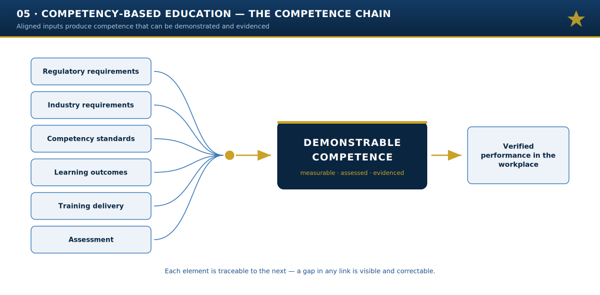
Figure 7 — The competence chain: aligned inputs producing demonstrable, evidenced competence.
Our people have been assessed, have assessed others, and have audited assessment systems. Each perspective shows a different weakness.
Frameworks are delivered with the forms, criteria and guidance an assessor needs on the day.
Instructor and assessor capability is developed against the IMO model courses that Administrations recognize.